Client reporting is the difference between a retainer that renews and one that quietly ends. Most agencies drown clients in vanity metrics or bury the real ROI under spreadsheets. The clients who stay are the ones who see clear cause and effect between your work and their pipeline. This post shows the exact frameworks, KPIs, and dashboards that keep retainers alive.
Retention gap: Agencies that send monthly ROI-focused reports retain clients at roughly double the rate of those sending generic activity updates. In our experience the pattern holds across 40+ agency clients using ACA.
Why Client Reporting Determines Retention
Clients do not pay for hours or messages sent. They pay for pipeline. When reporting shows direct links between your outbound or content work and revenue, renewals become automatic. When it shows only opens and clicks, the contract feels like a cost center.
The problem is most reporting systems were never built for this. They export raw data and expect the agency to connect the dots. Good reporting does the connecting upfront.
Core KPIs for Outbound Campaigns
Focus on four numbers that matter to the client and map directly to revenue.
Short answer: Track reply rate, meetings booked, cost per meeting, and pipeline generated. Everything else is secondary.
- Reply rate: Percentage of prospects who respond. Target above 8 percent for cold outreach once warm-up is complete.
- Meetings booked: Actual calls set on the calendar, not just expressions of interest.
- Cost per meeting: Monthly retainer divided by meetings delivered that month.
- Pipeline generated: Dollar value of opportunities created from the meetings.
KPIs for Content and Lead Magnets
Content reporting needs a different lens because results show up later in the funnel.
Use content KPIs when: the client runs long sales cycles or needs brand lift. Track leads captured, content-driven meetings, and engagement by role.
Use outbound KPIs when: the client needs meetings this quarter and has a defined ICP.
Building the Client Dashboard
A one-page dashboard beats a 20-page PDF every time. Clients open it, scan the four numbers, and see the trend lines.
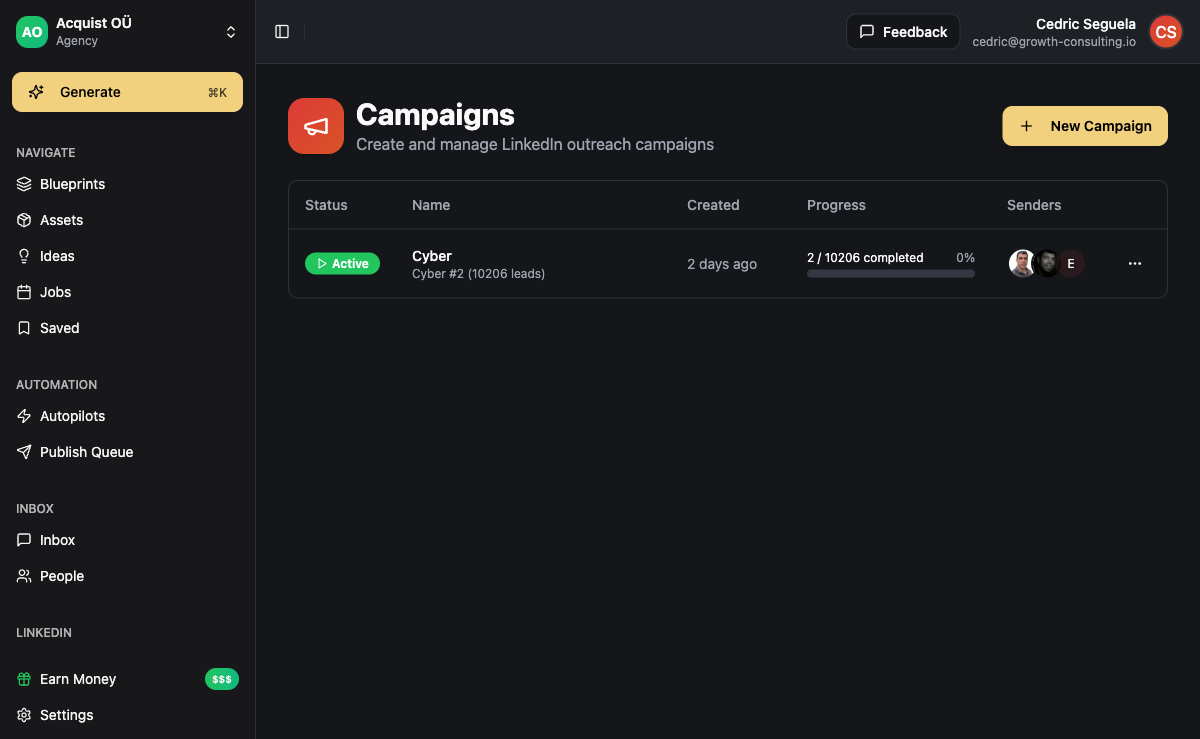
ACA pulls these numbers automatically from the same sequences running the campaigns. No manual exports, no copy-paste errors, no last-minute scramble before the monthly call.
How ACA Makes Client Reporting Easy
ACA records every touch across channels and tags it to the right client workspace. Reports generate on schedule and include the same four KPIs the agency agreed to track at kickoff. White-label branding is automatic, so the client sees only their numbers under the agency's logo.
Frequently Asked Questions
How often should I send client reports?
Monthly is the minimum. Weekly is better during the first 90 days when the campaign is still ramping and clients need frequent proof the retainer is working.
Which four numbers should every report include?
Reply rate, meetings booked, cost per meeting, and pipeline generated. Add trend arrows and last month comparison so the client sees movement without digging.
Do I need custom dashboards for each client?
No. Build one template with the four core KPIs. Toggle the client name and logo automatically via white-label settings. Custom requests come later once the retainer is stable.
What if a client only cares about vanity metrics?
Show both. Lead with the business KPIs, then include opens, clicks, and impressions as supporting data. Most clients learn to focus on the top line once they see it tied to revenue.