You do not need to hire more SDRs to scale outbound sales. The bottleneck in most teams is time spent on repetitive tasks like list building, initial messaging, and follow-ups. AI and automation let you run multi-channel sequences at higher volume without extra salaries or management overhead. Shift the model to AI SDRs that qualify and route leads so your human team spends time only on conversations that matter.
Use human SDRs when: you have a complex enterprise sale that requires deep industry knowledge on every call and your pipeline justifies the cost.
Use AI automation when: you need consistent 24/7 volume across channels, your offer fits a clear ICP, and you want reply rates without scaling headcount.
The Real Cost of Hiring More SDRs
Every new SDR adds salary, benefits, tools, training time, and management load. In our experience the fully loaded cost often exceeds $8,000 per month once you add software seats and ramp time. Volume gains are linear at best. When the SDR burns out or leaves, output drops again.
AI SDRs Versus Human Teams
An AI SDR does the first two or three touches across LinkedIn, email, and WhatsApp automatically. It follows your rules for personalization, timing, and lead scoring. Replies route straight to a human for the close. This split keeps people focused on high-value work while the system maintains daily output even on weekends.
Short answer: AI SDRs handle volume and first qualification. Human reps handle live conversations and negotiation. The combination multiplies output per person rather than multiplying headcount.
Using a Campaign Engine Instead of Spreadsheets
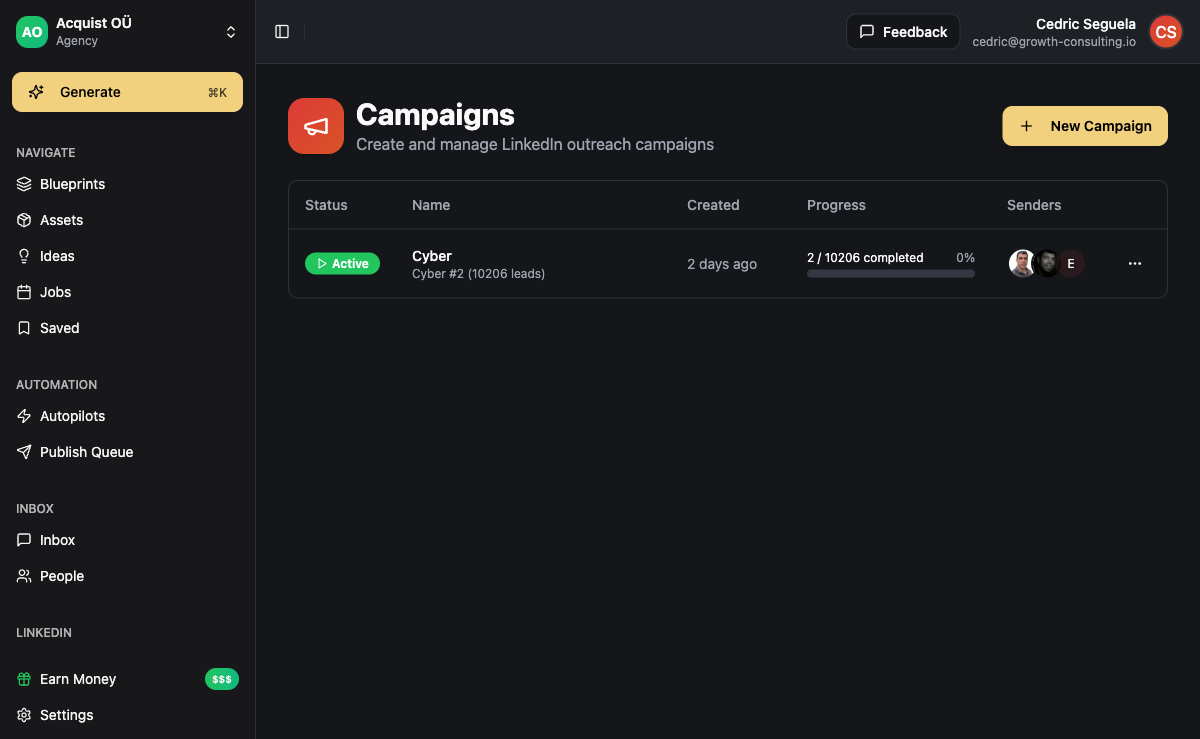
A campaign engine lets you build one sequence once and run it for every qualified lead. Add branches based on replies, opens, or channel preference. An engine like ACA's connects directly to your sending accounts so messages go out on schedule without manual triggers. The same setup supports multiple clients or campaigns without rebuilding from scratch each time.
Measuring What Actually Moves the Needle
Track positive replies per 100 sent and meetings booked per week. Ignore vanity open rates that AI engagement inflates. When automation handles the first touches, your human team should see reply quality improve because prospects receive relevant messages instead of generic blasts.
Reply quality benchmark: In our experience teams that move from manual follow-ups to automated multi-channel sequences see reply rates stabilize between 6 and 12 percent once targeting and messaging are dialed in. Below 4 percent usually means the sequence or ICP needs revision.
Getting Started With Automation
Start with one narrow ICP and a simple three-step sequence. Connect your channels, write first-draft messages, and set clear routing rules for replies. Run the campaign for two weeks, review the data, then expand or refine. The goal is steady output without adding another seat or manager.
AI SDR is an automated system that executes the early stages of outreach across channels, qualifies responses using your rules and content library, and books meetings or escalates only the conversations that need a human.
Frequently Asked Questions
How many leads can one AI SDR handle per day?
Most teams run 40 to 60 new contacts per day across channels once the system is warmed up. The limit comes from reply volume and human capacity to handle live conversations, not from the automation itself.
Will prospects know they are talking to AI?
First touches feel personal because they use your brand voice and reference specific details. When a prospect replies, they reach a human immediately. Most teams never disclose the automation layer because the experience feels consistent.
What happens if the AI sends the wrong message?
Every sequence includes human review queues and easy override rules. You set the content templates and conditions. The engine follows your logic. You can pause or edit any step without rebuilding the entire campaign.
How fast can you see results after switching to automation?
Expect a two-week ramp while inboxes warm and data starts flowing. After that the volume stays consistent without the ramp-up time you would need when hiring and training new people.